
The Rise of Remineralization and Enamel-Regenerating Gels
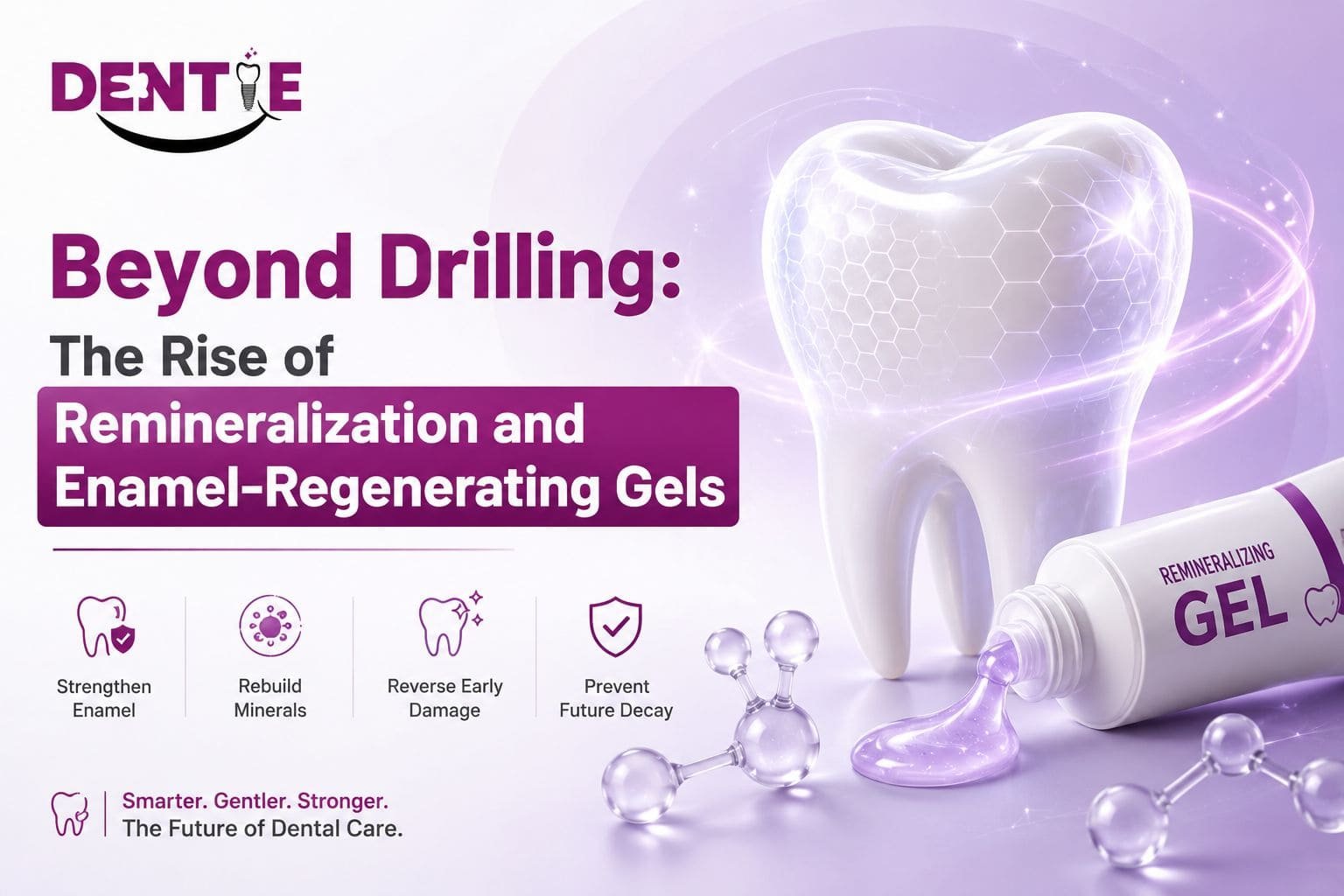
The Rise of Remineralization and Enamel-Regenerating Gels
August 25, 2026
Can modern remineralization gels really repair weakened enamel, or is “enamel regeneration” mostly a marketing term?
For decades, the phrase “dental treatment” often brought one image to mind: a dentist, a drill, and a filling. But modern dentistry is increasingly focused on something more conservative—preventing tooth structure from being lost in the first place.
One of the most interesting developments is the growing use of remineralization therapies, including fluoride gels, calcium-phosphate formulations, nano-hydroxyapatite, bioactive glass and other biomimetic materials.
These products are designed to help replenish minerals in enamel that has started to weaken. For patients with early enamel changes, white-spot lesions or certain forms of sensitivity, this approach can sometimes reduce the need for more invasive treatment.
But there is an important distinction:
Remineralizing weakened enamel is not the same as growing completely new enamel.
Mature enamel has no living cells capable of rebuilding it after it has been physically lost. However, early, non-cavitated enamel lesions can gain minerals again under the right conditions.
That difference is at the heart of the current conversation around “enamel-regenerating gels.”
What Is Enamel Remineralization?
Your enamel is the hard outer layer that protects the tooth underneath. It is highly mineralized and is constantly exposed to acids, bacteria, food and beverages.
Every day, your teeth go through two competing processes:
- Demineralization: minerals leave the enamel.
- Remineralization: minerals from saliva and other sources are redeposited into the enamel.
When these processes remain balanced, enamel can maintain its strength.
Problems begin when demineralization repeatedly outweighs remineralization. Frequent sugar consumption, plaque bacteria, acidic drinks, dry mouth and poor oral hygiene can all contribute to mineral loss. Dental caries itself is now understood as a dynamic process involving repeated cycles of demineralization and remineralization—not simply a hole that suddenly appears in a tooth.
What does early enamel damage look like?
One common sign is a white spot lesion.
These chalky or opaque areas can appear when minerals have been lost from enamel. They may occur around orthodontic brackets, near the gumline or in other areas where plaque remains for prolonged periods.
Importantly, a white spot does not necessarily mean that a filling is immediately required. Early, non-cavitated lesions may be managed with preventive and remineralization strategies when diagnosed appropriately.
Can Enamel Actually Regenerate?
This is where terminology matters.
The short answer: not in the way skin or bone heals.
Once natural enamel is fully formed and the tooth has erupted, the cells responsible for making enamel—called ameloblasts—are no longer present.
As a result, mature enamel cannot biologically regenerate itself after substantial tissue loss.
However, enamel is not completely passive.
If the enamel structure is still intact but has experienced early mineral loss, minerals can be deposited back into porous areas. This process is called remineralization.
So when a product claims to “regenerate enamel,” it is important to ask what it actually means.
In most consumer dental products, the more scientifically accurate description is:
“Supports remineralization of early enamel lesions.”
That is very different from:
“Grows back lost tooth enamel.”
At present, laboratory research into biomimetic and tissue-engineering approaches is exploring ways to create enamel-like structures, but true biological regeneration of fully functional human enamel is not yet routine dental treatment.
How Do Remineralizing Gels Work?
Remineralization products generally aim to make minerals available to weakened enamel and/or make the tooth surface more resistant to future acid attacks.
Depending on the formulation, the active ingredients may include:
- Fluoride
- Hydroxyapatite
- Calcium and phosphate compounds
- CPP-ACP
- Bioactive glass
- Tricalcium phosphate
- Emerging peptide-based biomimetic materials
The mechanisms differ, but the overall goal is similar: support the natural mineral balance of the tooth.
1. Fluoride: Still the Benchmark
Despite the excitement around newer ingredients, fluoride remains one of the most extensively studied tools for preventing and managing early dental decay.
Topical fluoride can encourage remineralization and help form a tooth surface that is more resistant to acid attack. It is available in toothpaste, gels, mouthrinses and professionally applied treatments.
For people at elevated risk of dental caries, dentists may recommend professionally applied or prescription-strength fluoride products depending on age and individual risk.
Why fluoride matters
Fluoride does more than simply “put minerals back.”
It can:
- Promote remineralization.
- Reduce mineral loss during acid attacks.
- Increase resistance of the enamel surface.
- Help control the progression of early carious lesions.
For routine home care, brushing twice daily with fluoride toothpaste remains a foundational recommendation for preventing cavities.
2. Nano-Hydroxyapatite: A Biomimetic Approach
Hydroxyapatite is particularly interesting because it is chemically similar to the primary mineral component of natural teeth.
Nano-hydroxyapatite uses extremely small particles designed to interact with the tooth surface and potentially fill or repair microscopic areas of mineral loss.
Research into hydroxyapatite-containing oral-care products has produced encouraging results. A recent systematic review and meta-analysis found clinical evidence that hydroxyapatite can help reduce caries risk, while another 2025 systematic review found no significant difference in several caries outcomes between fluoride-free hydroxyapatite toothpaste and fluoride toothpaste in the included studies.
However, this should not be interpreted as proof that hydroxyapatite is universally “better” than fluoride.
The evidence is promising, but fluoride has a much longer history of clinical research and guideline support.
3. Calcium-Phosphate Technologies
Enamel needs mineral ions such as calcium and phosphate to maintain its structure.
This has led researchers to develop formulations designed to make these ions more readily available around the tooth.
Some calcium-phosphate systems are intended to work alongside fluoride, potentially increasing the availability of mineral components needed for remineralization.
These formulations may be particularly interesting for early enamel lesions, but the effectiveness of an individual product depends on its specific chemistry, concentration, delivery system and clinical evidence.
4. CPP-ACP and Other Biomimetic Materials
Another category includes casein phosphopeptide–amorphous calcium phosphate (CPP-ACP).
The concept is to stabilize calcium and phosphate in a form that can become available around the tooth surface.
Other emerging approaches include:
- Tricalcium phosphate
- Bioactive glass
- Biomimetic peptides
- Amelogenin-inspired materials
- Calcium-phosphate nanocrystals
Recent research continues to investigate these technologies as alternatives or complements to traditional remineralization strategies.
Some of the most exciting results have been obtained in laboratory or in-situ models. That is valuable evidence—but it does not automatically mean that an ingredient will produce the same result in every patient's mouth.
Remineralization Gel vs Filling: What Is the Difference?
This is one of the most important questions patients ask.
|
|
|
|
|
|
|
|
|
|
|
|
|
|
|
|
|
|
The key issue is whether there is still enough intact tooth structure to remineralize.
If an early lesion has not developed into a cavity, a dentist may be able to manage it using preventive or nonrestorative strategies.
Once a true cavity has created a physical defect, a remineralizing gel cannot simply rebuild the missing chunk of enamel.
The American Dental Association's caries-management guidance recognizes nonrestorative treatment as an important part of managing appropriate carious lesions, particularly before extensive structural destruction occurs.
Can Remineralization Help You Avoid Drilling?
Sometimes—but not always.
The earlier a problem is identified, the more opportunities there may be to manage it conservatively.
For example, a dentist may consider remineralization-focused care when there is:
- An early white-spot lesion.
- Initial enamel demineralization.
- Early orthodontic demineralization.
- Increased risk of developing cavities.
- Certain cases of enamel erosion where the underlying cause can also be controlled.
But a gel is not a substitute for a dental examination.
If a tooth has a visible cavity, persistent pain, swelling, a broken area or deeper decay, delaying treatment in the hope that a gel will “regrow” the tooth could allow the disease to progress.
What About Tooth Sensitivity?
Remineralization and sensitivity are related—but they are not exactly the same problem.
Sensitivity can occur when enamel is worn or when dentin becomes exposed. It can also be associated with gum recession, tooth decay, grinding and other conditions.
Some ingredients used in modern dental products may help reduce sensitivity, but the right treatment depends on why the tooth is sensitive in the first place.
For example, sensitivity caused by exposed dentin should not automatically be assumed to mean that the enamel simply needs more minerals.
A dental examination can help identify whether the cause is:
- Enamel erosion.
- Gum recession.
- Tooth decay.
- Cracked teeth.
- Bruxism or tooth grinding.
- Dentin hypersensitivity.
- Recent dental treatment.
Dentie MultiSpecialty Dental Hospital also notes worn enamel, gum recession, tooth decay and grinding among possible causes of tooth sensitivity.
Are Enamel-Regenerating Gels Safe for Children?
This requires extra caution.
Children can benefit greatly from preventive dental care, but not every dental gel is appropriate for every age group.
Fluoride concentration, swallowing risk, frequency of use and the child's caries risk all matter.
Professional fluoride recommendations are age-specific; for example, ADA guidance distinguishes professionally applied fluoride recommendations for children younger than six from those for older patients.
Parents should therefore avoid choosing a high-fluoride or therapeutic dental gel solely because an advertisement says it “rebuilds enamel.”
For children, ask a dentist or pediatric dental professional:
- Does my child actually have enamel demineralization?
- Is the lesion active?
- What fluoride exposure is appropriate?
- Is the product suitable for my child's age?
- Could swallowing the product be a concern?
- How frequently should it be used?
Hydroxyapatite vs Fluoride: Which Is Better?
This question has no universal one-word answer.
Fluoride
Strengths:
- Extensive clinical evidence.
- Strong caries-prevention track record.
- Promotes remineralization.
- Widely recommended in evidence-based dental care.
Hydroxyapatite
Potential advantages:
- Biomimetic similarity to tooth mineral.
- Growing clinical research base.
- Promising evidence for remineralization and caries prevention.
- An option of interest for people seeking fluoride-free products.
But “fluoride-free” does not automatically mean “better,” and “natural” does not automatically mean “safer.”
The best choice depends on your age, caries risk, oral health, diet, existing dental conditions and the specific formulation.
Recent research suggests hydroxyapatite may be a promising alternative in certain circumstances, but the evidence does not justify treating every hydroxyapatite product as equivalent to every fluoride product.
What Remineralization Gels Cannot Do
A good dental-care decision starts with realistic expectations.
Remineralization gels generally cannot:
- Regrow a large piece of missing enamel.
- Close a deep cavity.
- Repair a cracked tooth.
- Replace a damaged filling.
- Treat an infected dental pulp.
- Reverse advanced tooth destruction.
- Correct the underlying cause of severe acid erosion by themselves.
If enamel has already been physically lost, the priority is to diagnose why it was lost and prevent further damage.
Depending on the condition, treatment may involve dietary changes, fluoride therapy, sensitivity management, bonding, fillings, crowns or other professional procedures.
The Future: From Remineralization to True Enamel Regeneration
The science does not stop at fluoride and hydroxyapatite.
Researchers are exploring biomimetic mineralization, peptides, enamel-matrix proteins, advanced calcium-phosphate systems and tissue-engineering approaches designed to imitate the way natural enamel forms.
Some experimental approaches attempt to guide mineral crystals into an organized enamel-like structure rather than simply depositing minerals randomly onto the tooth surface.
This is an exciting area of dental materials research.
But there is a major gap between:
“This material can create enamel-like mineral in a laboratory”
and
“A dentist can reliably regenerate a patient's lost enamel in routine clinical practice.”
The latter remains a significant scientific challenge.
So, for now, remineralization is a practical clinical concept; complete enamel regeneration remains an emerging research frontier.
How to Support Natural Enamel Remineralization
A gel cannot compensate for an environment that continuously causes mineral loss.
For stronger teeth, focus on the fundamentals:
Brush twice daily
Use an appropriate fluoride toothpaste unless your dentist has recommended another approach. The ADA recommends brushing twice daily with fluoride toothpaste for two minutes.
Reduce frequent sugar exposure
It is not only the amount of sugar that matters; frequent exposure can repeatedly fuel acid production by plaque bacteria.
Be careful with acidic drinks
Soft drinks, energy drinks and other acidic beverages can contribute to enamel erosion, particularly when consumed frequently.
Maintain saliva flow
Saliva naturally contributes minerals and helps buffer acids in the mouth.
Clean between your teeth
Plaque in areas that a toothbrush cannot reach can contribute to the caries process.
Treat the underlying problem
If reflux, dry mouth, grinding, poor oral hygiene or dietary habits are contributing to enamel damage, those factors also need attention.
When Should You See a Dentist?
Don't wait for a tooth to hurt before getting an enamel concern evaluated.
Schedule a dental examination if you notice:
- New white or chalky spots.
- Increasing sensitivity.
- Visible pits or holes.
- Brown, black or darkened areas.
- Pain when eating sweets.
- Pain with hot or cold foods.
- Chipped or worn enamel.
- Frequent acid exposure.
- Recurrent cavities.
- White spots developing around braces.
Early assessment matters because the difference between a potentially remineralizable lesion and a cavity requiring restoration cannot always be determined by looking at the tooth yourself.
The Dentie Perspective: Conservative Dentistry Starts Early
At Dentie MultiSpecialty Dental Hospital, preventive dentistry is part of a broader approach to maintaining oral health rather than waiting until dental problems become advanced.
Dentie provides comprehensive dental care, including preventive dentistry, dental fillings, kids dentistry, root canal treatment, braces and aligners, crowns and bridges, teeth whitening and other specialist services.
For patients concerned about enamel weakening, white spots or sensitivity, the first step should be identifying the cause and stage of the problem.
A dentist can determine whether your tooth is suitable for remineralization-focused management or whether restorative treatment is more appropriate.
Frequently Asked Questions
Can enamel grow back naturally?
No. Mature enamel cannot biologically regenerate after it has been physically lost because the enamel-forming ameloblast cells disappear after tooth development. However, early mineral loss in intact enamel can sometimes be reversed or arrested through remineralization.
Can a remineralizing gel reverse cavities?
It depends on what is meant by “cavity.” Early, non-cavitated lesions may respond to preventive and remineralization strategies. A cavity involving an actual structural hole generally cannot be rebuilt with an over-the-counter gel.
Is nano-hydroxyapatite better than fluoride?
Not necessarily. Hydroxyapatite is promising and has growing clinical evidence, but fluoride remains one of the most extensively researched agents for caries prevention and remineralization. Your dentist can help determine which approach is appropriate for you.
Can remineralization remove white spots?
Remineralization may improve the mineral content and appearance of some early white-spot lesions, particularly when the underlying cause is controlled. Results vary depending on lesion depth, activity and duration.
Can remineralization fix sensitive teeth?
It may help in some situations, but sensitivity has many possible causes. If sensitivity is persistent or worsening, the underlying cause should be diagnosed rather than assuming the problem is simply weak enamel.
Are enamel-regenerating gels a replacement for fillings?
No. They may help manage selected early lesions before significant structural damage occurs, but they cannot replace missing tooth structure in an established cavity.
Final Takeaway
The rise of remineralization therapies represents an important shift in modern dentistry.
Instead of thinking only about repairing damage after it happens, dentists can increasingly focus on detecting early disease, controlling risk factors and preserving natural tooth structure.
Fluoride remains the established foundation. Hydroxyapatite, calcium-phosphate systems, bioactive glass, CPP-ACP and newer biomimetic technologies are expanding the possibilities for minimally invasive care.
But patients should be careful with the phrase “enamel regeneration.”
If a gel helps minerals return to weakened enamel, that is remineralization.
If a product claims to grow back substantial amounts of enamel that have already disappeared, that is a much bigger scientific claim—and one that current everyday dental products cannot reliably deliver.
The smartest approach is not to wait for a cavity to become large enough to require drilling. Early diagnosis, evidence-based preventive care and personalized dental advice can help preserve as much natural tooth structure as possible.
If you are experiencing enamel sensitivity, white spots or concerns about early tooth decay, consider speaking with a dental professional at Dentie MultiSpecialty Dental Hospital for an individual assessment.
Your natural enamel is worth protecting—and the earlier you act, the more conservative your treatment options may be.