
10 Signs You Need to Visit a Dental Hospital Immediately
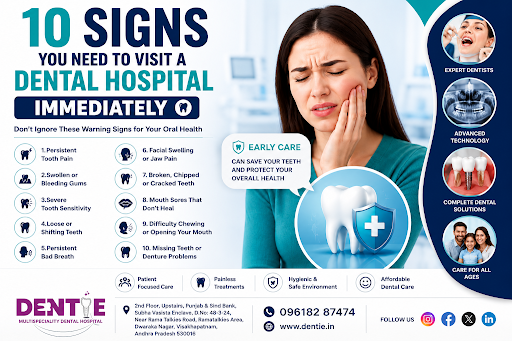
10 Signs You Need to Visit a Dental Hospital Immediately
Don't Ignore These Warning Signs for Your Oral Health
Many people delay visiting a dentist, hoping that tooth pain or discomfort will disappear on its own. Unfortunately, ignoring dental problems can lead to severe infections, tooth loss, and costly treatments. Whether you are a parent concerned about your child's oral health, an adult experiencing persistent tooth pain, or a senior dealing with age-related dental issues, recognizing the early warning signs is crucial.
If you are searching for the Best Dental Hospital in Vizag, understanding when to seek immediate dental care can help protect your smile and overall health. In this guide, Dentie Hospital explains the ten most important signs that indicate it's time to visit a dental hospital without delay.
Why Immediate Dental Care Matters
Oral health is closely connected to overall health. Untreated dental infections can spread to other parts of the body, while gum disease has been linked to conditions such as diabetes and heart disease. Early diagnosis and treatment not only relieve pain but also prevent complications and preserve your natural teeth.
Let's explore the key warning signs that should never be ignored.
1. Persistent Tooth Pain
Tooth pain is one of the most common reasons people visit a dentist. While occasional sensitivity may not always indicate a serious issue, continuous or severe pain should never be ignored.
Possible Causes:
- Tooth decay
- Dental abscess
- Cracked tooth
- Gum infection
- Impacted wisdom tooth
If your toothache lasts more than a day or worsens over time, it may signal an underlying problem requiring professional treatment.
Special Concern for Seniors
Adults over 50 may experience increased tooth sensitivity due to gum recession and enamel wear. Prompt evaluation can prevent further damage.
2. Swollen or Bleeding Gums
Healthy gums should not bleed during brushing or flossing. Persistent bleeding, redness, or swelling often indicates gum disease.
Common Symptoms:
- Bleeding while brushing
- Tender gums
- Bad breath
- Gum recession
- Loose teeth
Early-stage gum disease can usually be treated successfully, but advanced gum disease may result in tooth loss if left untreated.
Why Children Need Attention
Children with swollen gums may struggle to maintain proper oral hygiene, making early intervention essential.
3. Severe Tooth Sensitivity
Do you experience sharp pain when consuming hot coffee, cold water, or sweet foods? Increased sensitivity can indicate:
- Tooth decay
- Worn enamel
- Gum recession
- Cracked teeth
- Exposed tooth roots
A dental examination can determine the exact cause and help prevent further discomfort.
4. Loose or Shifting Teeth
Permanent teeth should never feel loose. If you notice movement in your teeth, it could indicate:
- Advanced gum disease
- Bone loss
- Dental trauma
- Infection
Immediate treatment is essential to save affected teeth and prevent further complications.
Important for Older Adults
Bone density naturally decreases with age, making seniors more vulnerable to tooth mobility.
5. Persistent Bad Breath
Everyone experiences bad breath occasionally. However, chronic bad breath that doesn't improve with brushing or mouthwash may signal:
- Gum disease
- Tooth decay
- Oral infections
- Dry mouth
- Poor oral hygiene
Professional dental cleaning and evaluation can identify the root cause and restore oral freshness.
6. Facial Swelling or Jaw Pain
Swelling around the face, jaw, or neck should never be ignored. This could indicate:
- Dental abscess
- Severe infection
- Wisdom tooth complications
- Salivary gland issues
A dental abscess can become a serious medical emergency if the infection spreads beyond the mouth.
When to Seek Immediate Help
Visit a dental hospital immediately if swelling is accompanied by:
- Fever
- Difficulty swallowing
- Difficulty breathing
- Severe pain
7. Broken, Chipped, or Cracked Teeth
Dental injuries can happen unexpectedly during sports, falls, or accidents. Even small cracks can allow bacteria to enter the tooth.
Common Causes:
- Biting hard foods
- Sports injuries
- Falls
- Teeth grinding
Prompt treatment helps preserve the tooth and prevent infection.
Children Are Especially Vulnerable
Active children often experience dental injuries during play. Quick dental care improves treatment outcomes.
8. Mouth Sores That Don't Heal
Most mouth ulcers heal within one to two weeks. However, sores that persist longer may require professional evaluation.
Potential Causes:
- Oral infections
- Trauma
- Nutritional deficiencies
- Underlying medical conditions
Regular dental examinations can help identify unusual changes in the mouth early.
9. Difficulty Chewing or Opening Your Mouth
If chewing becomes painful or you experience stiffness in your jaw, it may indicate:
- Temporomandibular joint (TMJ) disorders
- Dental infection
- Impacted wisdom teeth
- Arthritis affecting the jaw
Ignoring these symptoms can worsen discomfort and affect daily activities such as eating and speaking.
10. Missing Teeth or Denture Problems
Missing teeth affect more than appearance. They can lead to:
- Difficulty chewing
- Speech problems
- Bone loss
- Shifting teeth
- Reduced confidence
For adults and seniors, replacing missing teeth promptly helps maintain oral function and overall quality of life.
Modern Treatment Options
Today's dental technology offers effective solutions such as:
- Dental implants
- Bridges
- Dentures
- Implant-supported restorations
A qualified dental team can recommend the most suitable option based on your needs.
Dental Warning Signs in Children
Parents should watch for:
- Tooth pain
- Swollen gums
- Delayed tooth eruption
- White or brown spots on teeth
- Difficulty eating
- Persistent bad breath
Regular pediatric dental visits help detect issues early and establish lifelong oral health habits.
Oral Health Concerns for Adults Over 50
As we age, dental care becomes increasingly important. Common concerns include:
- Gum recession
- Tooth loss
- Dry mouth
- Worn enamel
- Increased risk of gum disease
Routine dental checkups can help seniors maintain healthy teeth and gums while preventing major complications.
How Regular Dental Checkups Prevent Emergencies
Many dental emergencies can be prevented through regular examinations and professional cleanings.
Benefits include:
- Early detection of cavities
- Gum disease prevention
- Oral cancer screening
- Professional cleaning
- Personalized oral care advice
Preventive care often saves patients time, discomfort, and treatment costs.
Why Choose the Best Dental Hospital in Vizag?
Choosing the right dental hospital ensures access to experienced professionals, advanced technology, and comprehensive treatment options.
When selecting a dental hospital, look for:
- Qualified dentists
- Modern diagnostic equipment
- Patient-focused care
- Preventive and restorative services
- Emergency dental support
Receiving timely care from the Best Dental Hospital in Vizag can make a significant difference in protecting your oral health and preserving your smile.
Conclusion
Dental problems rarely improve without proper treatment. Persistent tooth pain, bleeding gums, facial swelling, loose teeth, and other warning signs should never be ignored. Seeking professional dental care at the right time can prevent complications and improve your overall well-being.
Whether you're a parent concerned about your child's oral health, an adult experiencing discomfort, or a senior managing age-related dental concerns, timely intervention is the key to maintaining a healthy smile.
If you are looking for the Best Dental Hospital in Vizag, Dentie Hospital offers comprehensive dental care, advanced treatment options, and a patient-centered approach to help you achieve optimal oral health.
Schedule your dental consultation today and take the first step toward a healthier, brighter smile.
Frequently Asked Questions
1. When should I visit a dental hospital immediately?
You should seek immediate dental care if you experience severe tooth pain, facial swelling, bleeding gums, loose teeth, or a dental injury.
2. Is bleeding gums a serious problem?
Persistent bleeding gums may indicate gum disease and should be evaluated by a dentist as early as possible.
3. Can tooth pain go away on its own?
While symptoms may temporarily improve, the underlying cause often remains and may worsen without treatment.
4. How often should adults over 50 visit a dentist?
Most seniors should schedule dental checkups every six months or as recommended by their dentist.
5. Why is preventive dental care important?
Preventive care helps detect problems early, reducing the risk of dental emergencies and costly treatments.