
Salivary Diagnostics: The Future of Early Detection in Dentistry
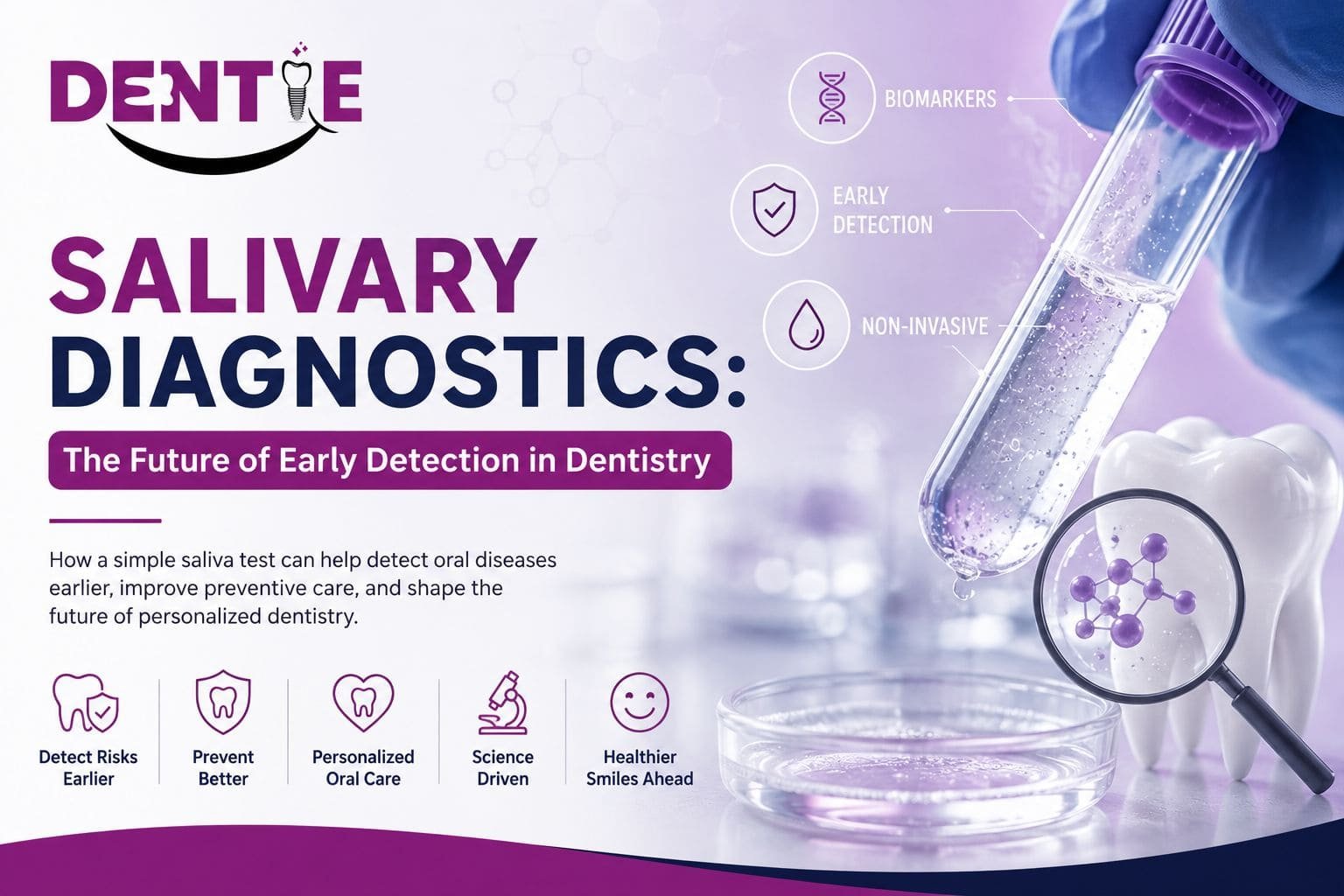
Salivary Diagnostics: The Future of Early Detection in Dentistry
August 25, 2026
Can your saliva reveal important clues about your oral health?
The answer may increasingly be yes.
For decades, dentists have relied on clinical examinations, dental X-rays, periodontal measurements, and—when necessary—laboratory testing or biopsy to identify oral disease. Today, researchers are exploring another potentially powerful source of information: saliva.
Saliva is more than a fluid that keeps the mouth moist. It contains proteins, enzymes, antibodies, hormones, metabolites, microorganisms, DNA, RNA and other biological molecules that can change in response to disease. These substances, known as biomarkers, are being investigated for their potential to help identify conditions such as dental caries, periodontal disease and oral cancer.
This emerging field is known as salivary diagnostics or saliva-based diagnostics.
The technology is promising because collecting saliva is generally simple, painless and non-invasive. However, it is important to distinguish between a biomarker that looks promising in research and a test that has been sufficiently validated for routine clinical diagnosis.
What Are Salivary Diagnostics?
Salivary diagnostics refers to the analysis of saliva to look for biological markers associated with health, disease or disease risk.
A saliva sample can potentially be analyzed for several categories of biomarkers, including:
- Proteins and enzymes
- Cytokines, which are involved in inflammation
- DNA and RNA
- MicroRNAs (miRNAs)
- Metabolites
- Microbial components
- Extracellular vesicles
- Other molecular signals associated with disease processes
Researchers are studying whether combinations of these biomarkers can provide useful information about oral diseases and, in some cases, systemic health.
The basic concept is relatively straightforward:
Disease or inflammation → biological changes → changes in salivary biomarkers → laboratory or point-of-care analysis → information that may support clinical assessment
The important word is “may.” A change in a salivary biomarker does not automatically mean that a person has a particular disease.
Why Is Saliva Interesting for Dental Diagnostics?
One of the biggest advantages of saliva is accessibility.
Unlike blood collection, saliva collection usually does not require a needle, making the process more comfortable and potentially easier to repeat. Saliva can also be collected relatively quickly and may be suitable for laboratory-based or, in the future, chairside testing.
This creates several potential advantages:
1. Non-invasive sample collection
A saliva sample can generally be collected without needles or invasive procedures.
2. Patient-friendly testing
Because collection is simple, saliva-based testing may be more acceptable to patients who are uncomfortable with blood draws or invasive sampling.
3. Potential for repeated monitoring
If validated for a particular purpose, an easy-to-collect sample could potentially support monitoring over time.
4. Possibility of point-of-care testing
Researchers are developing rapid testing platforms that could potentially analyze biomarkers closer to the dental chair rather than requiring every sample to be processed in a central laboratory.
5. Potential support for preventive dentistry
Instead of relying only on visible signs of disease, future diagnostic systems may help dentists combine clinical findings with molecular information to better understand individual risk.
However, saliva composition can vary depending on factors such as collection method, time of day, location of collection and sample handling. These variables make standardization an important challenge.
How Can Saliva Help Detect Oral Disease?
1. Dental Caries
Dental caries, commonly called tooth decay, is a complex disease influenced by oral microorganisms, diet, saliva and other biological factors.
Researchers have investigated salivary proteins, enzymes, minerals and other molecules that may be associated with caries activity or susceptibility.
A 2024 systematic review identified statistically significant differences in several salivary molecules between people with and without dental caries. Researchers investigated compounds including mucins, glycoproteins, interleukins, urease, carbonic anhydrase VI and urea.
This does not mean that a saliva test can currently replace a dentist's examination for cavities.
Instead, the research suggests that salivary biomarkers could eventually become an additional source of information for assessing caries risk and disease activity.
What could this mean in the future?
Imagine a preventive dental visit where a patient's clinical examination, dietary history, oral hygiene habits and salivary biomarkers are considered together.
Such information could potentially help dentists identify people who need more intensive preventive care before extensive tooth damage develops.
2. Periodontal Disease
Periodontal diseases involve inflammation and damage affecting the tissues that support the teeth.
Researchers have identified several salivary biomarkers associated with periodontal inflammation, including:
- Interleukin-1β (IL-1β)
- Interleukin-6 (IL-6)
- Interleukin-8 (IL-8)
- Matrix metalloproteinase-8 (MMP-8)
- Microbial markers
- Other inflammatory and tissue-remodelling molecules
Research has shown that combinations of biomarkers may provide useful information about periodontal disease.
There has also been research into point-of-care saliva testing for periodontal disease. For example, a 2023 study evaluated an MMP-8-based point-of-care device and found potential for distinguishing periodontitis from non-periodontitis in the study population, particularly among participants aged 40 years and older.
This illustrates an important point: salivary diagnostics are moving beyond laboratory research into evaluation of practical point-of-care technologies, but validation remains essential.
3. Oral Cancer
Perhaps the most widely discussed application of salivary diagnostics is oral cancer detection.
Researchers are studying whether saliva contains molecular changes associated with oral squamous cell carcinoma (OSCC), the most common malignant cancer of the oral cavity.
Potential biomarkers under investigation include:
- Cytokines such as IL-1β, IL-6 and IL-8
- MMPs such as MMP-9
- Messenger RNA
- MicroRNAs
- Proteins
- DNA-related changes
- Metabolites
- Extracellular vesicles
Systematic reviews have found numerous promising candidates. However, the results vary between studies, and researchers continue to investigate which biomarkers or combinations provide reliable diagnostic performance.
A 2026 meta-analysis covering 18 studies and 1,647 participants reported pooled sensitivity of 64% and specificity of 71% across multiple salivary biomarker classes, highlighting both the potential and the current limitations of these approaches.
Can saliva diagnose oral cancer today?
It should not be assumed that a saliva test can independently diagnose oral cancer.
Clinical examination remains fundamental, and suspicious oral lesions may require specialist evaluation and biopsy. The American Dental Association's current oral cancer guidance identifies biopsy as the reference standard for diagnosing potentially malignant disorders and oral squamous cell carcinoma.
The ADA's 2026 living guideline materials on salivary testing currently characterize salivary tests for oral cancer detection as a research recommendation, rather than established routine screening or diagnostic practice.
Therefore, a promising salivary biomarker should be viewed as a potential adjunct to clinical assessment, not a replacement for appropriate examination, referral or biopsy.
What Makes Saliva a “Liquid Window” Into Oral Health?
The scientific appeal of saliva comes from its biological complexity.
Saliva contains material originating from:
- Salivary glands
- Oral tissues
- Immune cells
- Microorganisms
- Gingival tissues
- The broader oral environment
Because disease can alter biological processes, these changes may sometimes be reflected in salivary composition. Researchers can then use techniques such as PCR, ELISA, proteomic analysis, metabolomics and other molecular methods to investigate these changes.
This is why researchers sometimes describe saliva as a potential “liquid biopsy”—although the term should not be interpreted as meaning saliva can currently replace tissue biopsy for conditions such as suspected oral cancer.
The Science Behind Salivary Biomarkers
To understand the future of salivary diagnostics, it helps to understand some of the major biomarker categories.
Proteins
Changes in proteins and inflammatory molecules may reflect tissue injury, immune responses or disease activity.
Cytokines
Cytokines such as IL-1β, IL-6 and IL-8 are involved in inflammatory processes and have been studied extensively in periodontal disease and oral cancer research.
MicroRNAs
MicroRNAs are small RNA molecules involved in regulating gene expression. Researchers are investigating whether specific miRNA patterns could help distinguish healthy tissue from disease.
Nucleic acids
Saliva can contain DNA and RNA from human cells and microorganisms. Researchers are exploring whether genetic and molecular alterations can provide disease-related information.
Metabolites
Metabolites are small molecules produced during biological processes. Changes in metabolic profiles may provide clues about disease states.
Extracellular vesicles
These microscopic particles can carry proteins, lipids and nucleic acids between cells. Their potential role in disease detection is an emerging area of salivary research.
The future may not depend on finding one perfect biomarker. Instead, researchers are increasingly interested in biomarker panels, where multiple molecular signals are analyzed together.
Are Salivary Diagnostic Tests Available Today?
This is one of the most important questions for patients and dental professionals.
The answer is: some saliva-based tests and research technologies exist, but salivary diagnostics are not yet a universal replacement for conventional dental diagnosis.
The American Dental Association reported that, as of October 2023, there were no FDA-approved salivary diagnostic tests specifically for evaluating risk of periodontal disease, dental caries or head and neck cancer.
At the same time, research and development have continued rapidly. Point-of-care technologies for periodontal biomarkers, for example, have been investigated in clinical studies.
This means availability depends on:
- The condition being tested
- The specific biomarker
- The device or laboratory assay
- Regulatory approval
- Clinical validation
- The country in which testing is offered
- Whether the test is intended for research, screening, monitoring or diagnosis
Patients should therefore ask their dentist what a particular test is actually designed to measure and how the result will influence clinical care.
Salivary Diagnostics vs Traditional Dental Diagnosis
Salivary testing should not be viewed as an “either-or” choice.
A future dental diagnostic model may combine several sources of information:
|
|
|
|
|
|
|
|
|
|
|
|
|
|
|
|
|
|
|
|
|
The strongest future model may therefore be multimodal diagnosis, where molecular, clinical and imaging information are considered together.
What Are the Potential Benefits of Salivary Diagnostics?
If the technology becomes sufficiently validated and standardized, salivary diagnostics could offer several important benefits.
Earlier identification
Biomarkers may potentially change before obvious clinical symptoms appear, creating opportunities for earlier investigation.
Less invasive testing
Saliva collection is generally simpler and less invasive than blood collection or tissue sampling.
Personalized prevention
Biomarker information could eventually help dentists tailor preventive strategies to individual risk profiles.
Convenient monitoring
Repeated saliva collection could potentially make monitoring easier for certain conditions.
Point-of-care possibilities
Portable biosensors and lab-on-a-chip technologies could eventually allow certain analyses to be performed closer to the patient.
Population-level screening potential
If accurate, affordable and validated tests become available, simple sample collection could potentially make screening programs easier to implement.
These are potential benefits, not guarantees. Clinical usefulness depends on the accuracy, reproducibility and validation of the specific test.
What Are the Current Limitations?
Despite the excitement surrounding salivary diagnostics, several challenges remain.
1. Biomarker variability
Saliva composition can vary based on hydration, food intake, oral hygiene, time of day, collection method and other factors.
2. Lack of standardization
Researchers may use different collection procedures, laboratory methods and analytical techniques, making studies difficult to compare.
3. Disease specificity
A biomarker associated with inflammation may increase because of several different oral conditions. A positive result may therefore not identify one specific disease.
4. Need for large-scale validation
A biomarker may perform well in a small research study but perform differently in a larger and more diverse population.
5. False-positive and false-negative results
No diagnostic test is perfect. An unreliable test could create unnecessary anxiety or provide false reassurance.
6. Clinical interpretation
A biomarker result needs to be interpreted in the context of symptoms, clinical examination, medical history and other diagnostic findings.
7. Oral cancer diagnosis remains complex
Current evidence supports continued research into salivary biomarkers, but saliva testing has not replaced clinical examination and biopsy for diagnosing suspicious oral lesions.
What Does the Future of Salivary Diagnostics Look Like?
The next generation of salivary diagnostics could combine several rapidly developing technologies.
AI-powered biomarker analysis
Artificial intelligence may eventually analyze combinations of biomarkers and identify patterns that are difficult to recognize using a single marker.
Rather than asking:
“Is biomarker X elevated?”
future systems may ask:
“What does this combination of 20, 50 or 100 biological signals suggest about this patient's oral health profile?”
Biosensors
Miniaturized sensors may allow specific molecules to be detected rapidly from small saliva samples.
Lab-on-a-chip technology
Microfluidic devices may eventually integrate sample preparation, biomarker detection and analysis into compact systems.
Multi-omics
Researchers are increasingly studying combinations of:
- Genomics
- Transcriptomics
- Proteomics
- Metabolomics
- Microbiomics
This broader approach could potentially create a more detailed molecular picture of oral disease.
Personalized dentistry
The long-term vision is a move from a primarily reactive model of dentistry toward risk-based and personalized oral healthcare.
Instead of waiting until a patient develops obvious symptoms, dentists may eventually be able to combine clinical data, imaging, lifestyle factors and validated molecular biomarkers to identify patients who could benefit from earlier intervention.
What Could a Future Saliva Test Look Like?
A future chairside workflow might look something like this:
Step 1: A patient provides a saliva sample.
Step 2: The sample enters a compact diagnostic device.
Step 3: The device analyzes selected biomarkers.
Step 4: Software compares the biomarker pattern against validated reference data.
Step 5: The dentist receives a risk or diagnostic-support report.
Step 6: The result is interpreted alongside the patient's clinical examination and other diagnostic findings.
Step 7: Appropriate preventive care, monitoring, further testing or referral is recommended.
This vision is technologically plausible, but the exact workflow will depend on future validation, regulation and clinical adoption.
What Dentists Need to Know Before Adopting Salivary Diagnostics
Dental clinics considering emerging diagnostic technologies should look beyond marketing claims.
Before adopting a salivary test, clinicians should consider:
- What disease or risk factor does the test actually assess?
- What biomarkers does it measure?
- Has the test been independently validated?
- What are its sensitivity and specificity?
- What patient population was studied?
- Does the test have appropriate regulatory authorization?
- How should positive and negative results be interpreted?
- Will the result change clinical management?
- How should samples be collected and stored?
- What training is required?
- What are the costs of equipment, consumables and laboratory analysis?
The goal should not simply be to adopt the newest technology. The goal should be to adopt technology that provides clinically meaningful, reliable and actionable information.
What Should Patients Know About Saliva-Based Dental Testing?
For patients, the most important message is simple:
A saliva test should not replace a dental examination.
If you have:
- A mouth ulcer that does not heal
- A persistent lump or thickened area
- Unexplained bleeding
- Persistent pain
- Difficulty swallowing
- A change in oral tissue appearance
- Persistent swelling
- Unexplained tooth mobility
you should seek professional dental or medical evaluation rather than relying on a saliva test or attempting to interpret biomarkers yourself.
A saliva test may eventually become a valuable supporting tool, but the meaning of any result depends on proper clinical interpretation.
Frequently Asked Questions
Can saliva detect dental diseases?
Research suggests that certain salivary biomarkers may be associated with dental caries, periodontal disease and other oral conditions. However, many biomarkers still require further validation before they can be used as routine diagnostic tests.
Can a saliva test detect oral cancer?
Researchers have identified numerous salivary biomarkers with potential for oral cancer detection. However, current evidence is not sufficient to treat salivary testing as a replacement for clinical examination or biopsy when a suspicious lesion is present.
Is saliva testing painful?
Saliva collection itself is generally non-invasive and does not require a needle.
Can saliva testing replace a biopsy?
No. For suspicious oral lesions, biopsy and histopathological examination remain important reference methods for diagnosis.
Are salivary diagnostic tests available in dental clinics?
Some saliva-based and point-of-care technologies are being studied or used for particular purposes, but availability, regulatory status and clinical validation vary. Patients should ask their dentist exactly what a specific test is designed to assess.
Could saliva testing become part of routine dental check-ups?
It is possible. If future studies establish reliable, standardized and clinically useful biomarker panels, saliva testing could potentially become an additional component of preventive and personalized dentistry.
The Future: From Detection to Prevention
The most exciting possibility of salivary diagnostics is not simply the ability to perform another test.
It is the possibility of changing when and how oral disease is detected.
Today, dentists often identify disease through a combination of symptoms, clinical signs, imaging and other established diagnostic procedures. Tomorrow, validated molecular information from saliva may add another layer of insight.
A future dental appointment could potentially involve:
Clinical examination + Digital imaging + Salivary biomarkers + AI-assisted analysis + Personalized prevention
But reaching that future requires rigorous research.
Salivary diagnostics have shown considerable promise, particularly in research involving dental caries, periodontal disease and oral cancer. At the same time, systematic reviews and current professional guidance emphasize the need for better validation, standardization and clinical evidence before many salivary biomarkers can become routine diagnostic tools.
For now, the best approach is neither to dismiss the technology nor to overstate it.
Saliva may become an important window into oral health—but the dentist remains essential for interpreting what that window shows.
Final Takeaway
Salivary diagnostics represent one of the most interesting emerging areas in modern dentistry.
Because saliva is easy to collect and contains a wide range of biological molecules, researchers are exploring its potential to support earlier identification of dental caries, periodontal disease and oral cancer.
The future may bring smarter biosensors, AI-assisted analysis, lab-on-a-chip devices and personalized biomarker panels that make dental diagnostics more convenient and potentially more preventive.
However, promising research is not the same as an established diagnostic test.
For patients today, regular dental examinations remain essential. Salivary diagnostics should be viewed as an emerging technology that may complement—not replace—established clinical assessment as the evidence develops.
For patients seeking comprehensive dental evaluation and preventive oral healthcare, Dentie Multispeciality Hospital can be a starting point for learning more about available dental care and professional evaluation.